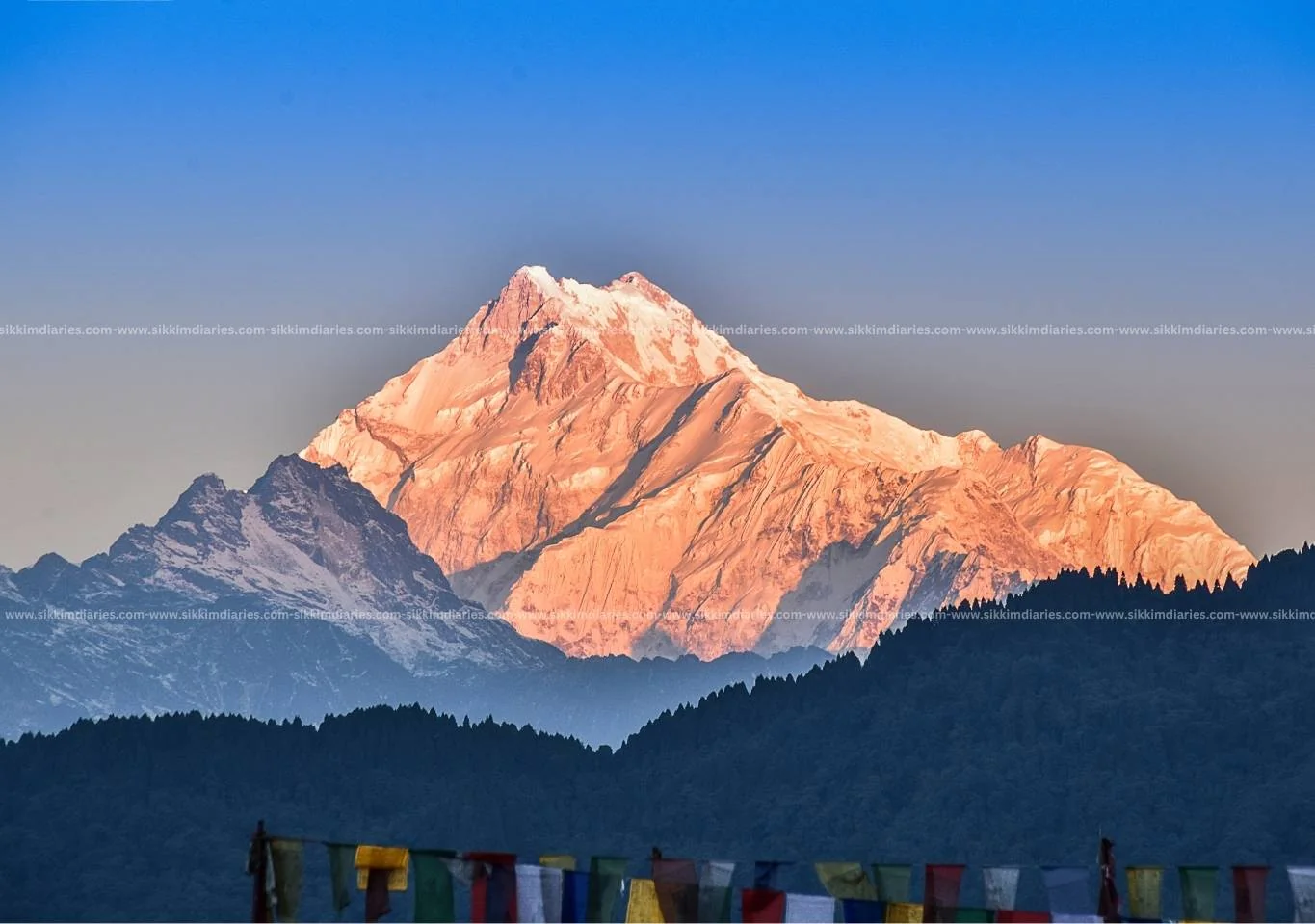
Standing majestically at 8,586 metres (28,169 feet) above sea level, Mount Kanchenjunga is the highest mountain in India and the third-highest mountain in the world, after Mount Everest and K2. Straddling the border between Sikkim (India) and eastern Nepal, this snow-covered Himalayan giant is not only a geographical marvel but also a sacred mountain deeply revered by the people of Sikkim.
Known as the "Five Treasures of the Great Snow," Kanchenjunga is famous for its towering peaks, glaciers, alpine forests, and breathtaking sunrise views. Every year, thousands of travelers visit Sikkim to witness its grandeur from viewpoints, monasteries, and trekking trails.
Whether you're a nature lover, photographer, trekker, or spiritual traveler, Mount Kanchenjunga is one of the greatest attractions of the Eastern Himalayas.
About Mount Kanchenjunga
The name Kanchenjunga comes from the Tibetan words "Kang-chen-Dzö-nga," meaning "The Five Treasures of the Great Snow." According to local belief, these five treasures represent:
Gold
Silver
Precious Gems
Grain
Sacred Scriptures
For the people of Sikkim, Kanchenjunga is considered a sacred guardian mountain and holds immense religious and cultural significance.
Quick Facts
Height: 8,586 metres (28,169 feet)
Rank: Third-highest mountain in the world
Highest Peak in India
Location: Border of Sikkim (India) and Nepal
Mountain Range: Eastern Himalayas
UNESCO Region: Kanchenjunga National Park
Why Visit Mount Kanchenjunga?
Kanchenjunga is one of the most spectacular mountain destinations in the world.
Highlights
Highest mountain in India
Third-highest mountain on Earth
Magnificent sunrise views
Snow-covered Himalayan peaks
Sacred mountain of Sikkim
UNESCO-listed national park
World-famous trekking routes
Diverse wildlife and flora
Spectacular photography opportunities
Rich Buddhist heritage
Best Places to View Mount Kanchenjunga
Pelling
Pelling offers some of the closest and clearest panoramic views of Mount Kanchenjunga.
Tashi View Point
Located near Gangtok, this viewpoint is famous for breathtaking sunrise views of the mountain.
Ganesh Tok
A popular viewpoint overlooking Gangtok with spectacular Himalayan scenery on clear days.
Hanuman Tok
One of the finest places to admire the Kanchenjunga range in peaceful surroundings.
Ravangla
The Buddha Park area provides stunning panoramic views of the snow-clad peaks.
Zuluk & Nathang Valley
Along the Old Silk Route, these high-altitude destinations offer dramatic views of the Eastern Himalayas.
Dzongri Viewpoint
One of India's most famous trekking viewpoints for close-up views of Mount Kanchenjunga.
Goechala Viewpoint
The ultimate destination for trekkers seeking one of the closest possible views of Kanchenjunga without climbing the mountain.
Best Time to Visit
Spring (March–May)
Temperature: 5°C–20°C
Blooming rhododendrons and clear mountain views make spring one of the best seasons.
Summer (June)
Comfortable weather with lush green valleys.
Monsoon (July–September)
Heavy rainfall often hides mountain views but transforms the landscape into vibrant greenery.
Autumn (October–November) Best Season
Crystal-clear skies offer the best visibility of Mount Kanchenjunga.
Winter (December–February)
Cold weather with snow-covered landscapes and excellent visibility on clear days.
Best Time of Day
Early morning is the ideal time to witness Kanchenjunga glowing in golden sunlight. Sunrise offers the most spectacular photography conditions.
Adventure Activities
Visitors can enjoy:
Trekking
Camping
Nature walks
Wildlife watching
Mountain photography
Birdwatching
Village tourism
Cultural tours
Monastery visits
Wildlife Around Kanchenjunga
The Kanchenjunga region is home to:
Red Panda
Snow Leopard
Himalayan Black Bear
Musk Deer
Blue Sheep
Himalayan Monal
Blood Pheasant
Numerous alpine bird species
Nearby Attractions
Combine your visit with:
Kanchenjunga National Park - https://share.google/nfxmAJbQag4t917i5
Goechala Trek - https://share.google/qo8yIjI0d3RIf0RKI
Dzongri Trek - https://share.google/KsTzt4FHhqEamqRL9
Pelling - https://share.google/LWDwuCIxUSIv9Jrmz
Ravangla - https://share.google/cRWctmpliNqIhAqEH
Pemayangtse Monastery - https://share.google/MmJcy0iZL0ztNR7xU
Khecheopalri Lake - https://share.google/FBTcoevKkgvGfoSou
Rabdentse Ruins - https://share.google/5zpm6RxhiLjrbXORM
Buddha Park - https://share.google/EIQgwT2wyslfRouK3
Tsomgo Lake - https://share.google/c4QHbCJoWGsgmyzl0
Nathula Pass - https://share.google/aOry4mFhq58mdifBX
Nathang Valley - https://share.google/MYGrJxIPMcbHohTH4
Travel Tips
Visit early in the morning for the clearest views.
Carry warm clothing throughout the year.
Bring sunglasses and sunscreen.
Use a camera with a zoom lens for mountain photography.
Respect local customs, as Kanchenjunga is considered sacred.
Check weather forecasts before planning mountain-view excursions.
Avoid littering and help preserve the fragile Himalayan ecosystem.
Why Mount Kanchenjunga Should Be on Your Bucket List
Mount Kanchenjunga is more than just a mountain—it is the heart and soul of Sikkim. Its snow-clad peaks, spiritual importance, rich biodiversity, and awe-inspiring landscapes make it one of the most unforgettable destinations in the Himalayas.
Whether you're admiring it from Pelling, trekking to Goechala, or watching the sunrise from Gangtok, every glimpse of Kanchenjunga is a memory to cherish for a lifetime.
Frequently Asked Questions
1. Where is Mount Kanchenjunga located?
Mount Kanchenjunga is located on the border of Sikkim (India) and eastern Nepal in the Eastern Himalayas.
2. Why is Mount Kanchenjunga famous?
Mount Kanchenjunga is famous for being the highest mountain in India and the third-highest mountain in the world, renowned for its breathtaking beauty, sacred significance, and world-class trekking routes.
3. How high is Mount Kanchenjunga?
Mount Kanchenjunga stands at 8,586 metres (28,169 feet) above sea level.
4. What is the best time to see Mount Kanchenjunga?
The best time to visit is March to May and October to November, when the skies are usually clear and the mountain views are spectacular.
5. Can I climb Mount Kanchenjunga?
Yes, but climbing Kanchenjunga is extremely challenging and requires special permits, experienced guides, and advanced mountaineering skills. Most tourists enjoy the mountain from viewpoints or trekking routes.
6. What are the best places to view Mount Kanchenjunga?
Popular viewpoints include Pelling, Tashi View Point, Ganesh Tok, Hanuman Tok, Ravangla, Dzongri, Goechala Viewpoint, Zuluk, and Nathang Valley.
7. Is Mount Kanchenjunga visible from Gangtok?
Yes. On clear days, Mount Kanchenjunga can be seen from several viewpoints in and around Gangtok, including Tashi View Point, Ganesh Tok, and Hanuman Tok.
8. Why is Mount Kanchenjunga considered sacred?
The people of Sikkim regard Mount Kanchenjunga as a sacred guardian deity. It holds deep spiritual significance in local Buddhist traditions and is respected as a holy mountain.
9. What does the name Kanchenjunga mean?
Kanchenjunga means "The Five Treasures of the Great Snow," symbolizing gold, silver, precious gems, grain, and sacred scriptures according to local belief.
10. Which trekking route offers the best view of Mount Kanchenjunga?
The Goechala Trek is considered one of the best trekking routes for close-up views of Mount Kanchenjunga. The Dzongri Trek is another popular option.
11. Is Kanchenjunga National Park a UNESCO World Heritage Site?
Yes. Khangchendzonga National Park is a UNESCO World Heritage Site, recognized for its exceptional natural beauty, biodiversity, and cultural importance.
12. What wildlife can be found around Mount Kanchenjunga?
The region is home to Red Pandas, Snow Leopards, Himalayan Black Bears, Musk Deer, Blue Sheep, Himalayan Monals, Blood Pheasants, and many rare Himalayan bird species.
13. What should I carry while visiting Mount Kanchenjunga viewpoints?
Carry warm clothing, comfortable walking shoes, sunglasses, sunscreen, drinking water, a camera, and binoculars for the best mountain-viewing experience.
14. How many days are enough to explore the Kanchenjunga region?
A 4–7 day trip is ideal for sightseeing in Pelling, Gangtok, and nearby viewpoints, while trekking to Goechala usually requires 10–11 days.
15. Can Sikkim Diaries Tours & Treks arrange Kanchenjunga tours?
Yes. Sikkim Diaries Tours & Treks offers customized Sikkim tour packages, Goechala and Dzongri trekking expeditions, Pelling and Gangtok sightseeing tours, private taxi services, hotel bookings, permit assistance, and complete travel planning to help you experience the majestic beauty of Mount Kanchenjunga.
Plan Your Trip with Sikkim Diaries Tours & Treks
Exploring Sikkim is easier when you travel with experienced local experts. Sikkim Diaries Tours & Treks is a registered travel agency based in Sikkim, offering customized tour packages, private taxi services, hotel bookings, trekking expeditions, and permit assistance for travelers visiting the Eastern Himalayas.
Whether you're planning a family vacation, honeymoon, adventure tour, bike trip, or trekking expedition, our local team helps you experience Sikkim comfortably and safely. We create personalized itineraries based on your travel style, budget, and the season, ensuring you make the most of your journey.
Our Services
Customized Sikkim Tour Packages
Gangtok, Pelling, Lachung & Lachen Tours
Silk Route & Zuluk Tour Packages
Darjeeling & North Bengal Tours
North Sikkim Permit Assistance
Nathula Pass Permit Assistance
Hotel & Homestay Bookings
Airport & Railway Station Transfers
Private Taxi & Cab Services
Trekking & Adventure Tours
Group Tours & Corporate Trips
Honeymoon & Family Holiday Packages
Why Choose Sikkim Diaries Tours & Treks?
Local travel experts with extensive destination knowledge
Registered travel agency in Sikkim
Transparent pricing with no hidden charges
Comfortable vehicles driven by experienced local drivers
Carefully selected hotels and homestays
24/7 travel support throughout your journey
Personalized itineraries tailored to your needs
If you're planning a trip to Sikkim, contact Sikkim Diaries Tours & Treks for a hassle-free travel experience. Our team will help you design the perfect itinerary based on your interests, travel dates, and budget.
Share this article
About the Author
Suk Rani Rai
A passionate travel writer based in Sikkim, exploring the hidden corners of the Eastern Himalayas. Dedicated to sharing authentic travel experiences, local culture, and practical tips to help you discover the magic of Sikkim.